
Introduction: Why Degrees Alone Are No Longer Enough
In today’s job market, having a degree is no longer a guarantee of employment. Many graduates have strong academic records, yet they struggle to get hired. The main reason behind this problem is the growing gap between what schools teach and what employers actually need.
Schools and colleges focus heavily on exams, grades, and theoretical knowledge. Employers, on the other hand, look for practical skills, adaptability, and the ability to solve real-world problems. This mismatch is often called the skill gap, and it has become one of the biggest challenges in modern education and hiring.
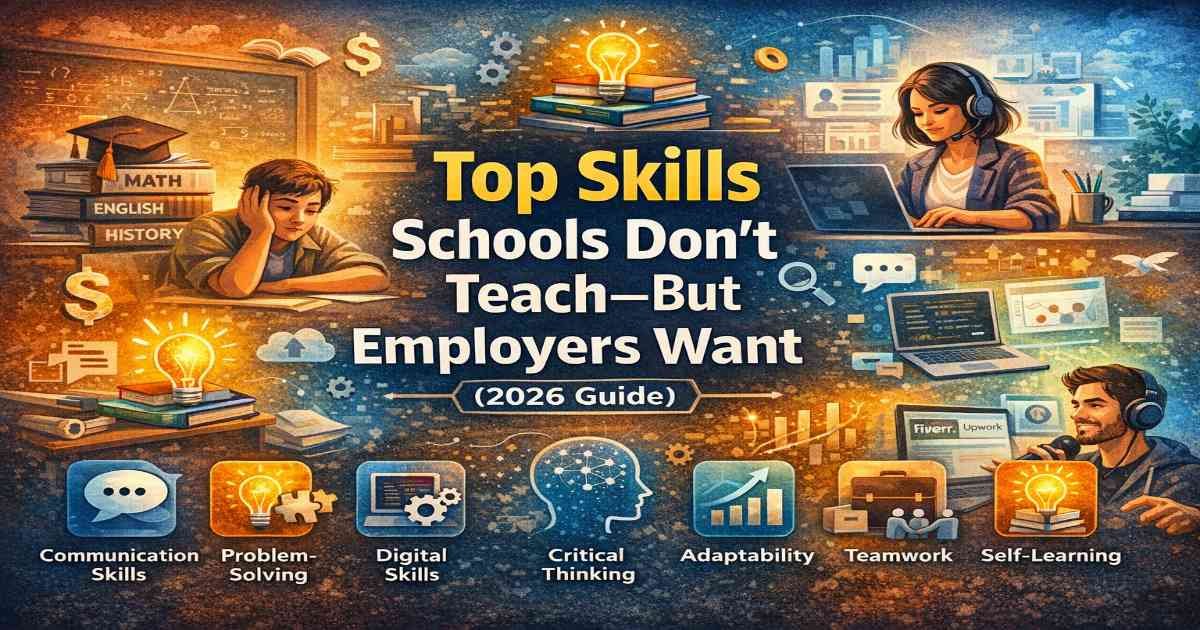
We’ll explore the top skills that schools don’t teach—but employers actively look for when hiring candidates.
The Skill Gap Between Education and Industry
Traditional education systems are largely syllabus-driven. Students are trained to memorize information, follow predefined answers, and score well in exams. While this approach helps in academics, it doesn’t fully prepare students for professional life.
In real workplaces, problems don’t come with fixed answers. Employees are expected to think independently, make decisions, and adapt quickly. Employers often find that fresh graduates lack these abilities, even if they are academically strong. This gap between education and industry expectations is why skills matter more than ever.
Communication Skills: More Than Just Speaking English
Communication skills are not limited to fluency in English. They include the ability to clearly express ideas, listen actively, and communicate professionally with colleagues, clients, and managers.
In schools, students rarely get opportunities to practice real communication. As a result, many talented individuals struggle during interviews or meetings. Employers highly value candidates who can explain their thoughts clearly, write professional emails, and collaborate effectively through conversation.
Problem-Solving Skills: Real Work Needs Real Thinking
Exams often reward memorization, but jobs demand problem-solving. In the workplace, challenges are unpredictable, and solutions are rarely straightforward.
Problem-solving skills involve analyzing situations, identifying root causes, and finding practical solutions—often under pressure. Employers prefer candidates who stay calm during difficulties and focus on solutions instead of blaming circumstances.
Critical Thinking: Questioning Leads to Better Decisions
Critical thinking means evaluating information rather than accepting it at face value. It involves asking the right questions, checking facts, and considering multiple perspectives before making decisions.
Most schools emphasize “correct answers,” while companies value smart thinking. Employees with strong critical-thinking skills help organizations avoid mistakes, improve processes, and make better strategic decisions.
Digital Skills: A Basic Requirement in Every Job
Today, almost every profession involves technology in some form. Whether it’s marketing, finance, education, or operations, digital tools are everywhere.
Basic digital skills include using professional email, working with online tools, understanding data, and conducting effective online research. While schools may teach computer basics, real-world digital competence often needs to be developed independently. Employers strongly prefer candidates who are comfortable with technology and quick to learn new tools.
Adaptability: The Ability to Handle Change
Technology, job roles, and workplace environments are changing faster than ever. Employees who resist change often struggle to grow in their careers.
Adaptability means being open to learning new skills, accepting feedback, and adjusting to new situations. Employers look for individuals who can evolve with the organization and remain productive even during transitions.
Time Management: Productivity Matters More Than Hours
In school, schedules are fixed and structured. In professional life, employees juggle multiple tasks, deadlines, and responsibilities at the same time.
Time-management skills help individuals prioritize work, meet deadlines, and maintain consistent productivity. Employers trust and value employees who can manage their time efficiently without constant supervision.
Teamwork and Collaboration: Success Is Rarely Solo
Modern workplaces rely heavily on teamwork. Projects are completed by groups, not individuals, and success depends on collaboration.
While schools often reward individual performance, companies measure team results. Employers value candidates who respect different opinions, communicate openly, and contribute positively to team goals.
Emotional Intelligence: The Silent Career Booster
Emotional intelligence refers to understanding and managing one’s emotions while also being aware of others’ feelings. This skill plays a major role in handling stress, conflicts, and professional relationships.
Employees with high emotional intelligence tend to work better with others, resolve conflicts calmly, and grow into leadership roles. Employers increasingly recognize emotional intelligence as a key factor in long-term success.
Self-Learning: The Most Important Skill Schools Ignore
Perhaps the most valuable skill employers want is the ability to learn independently. Industries change rapidly, and no degree can stay relevant forever.
Self-learners constantly upgrade their skills, explore new tools, and stay updated with industry trends. Employers prefer such candidates because they adapt quickly and require less hand-holding.
Conclusion: Skills Build Careers, Not Just Degrees
The modern job market sends a clear message—degrees may open doors, but skills decide how far you go. Candidates who rely only on academic qualifications often struggle, while those who focus on skill development stand out.
By improving communication, problem-solving, digital literacy, adaptability, and self-learning habits, anyone can become more employable and future-ready.