
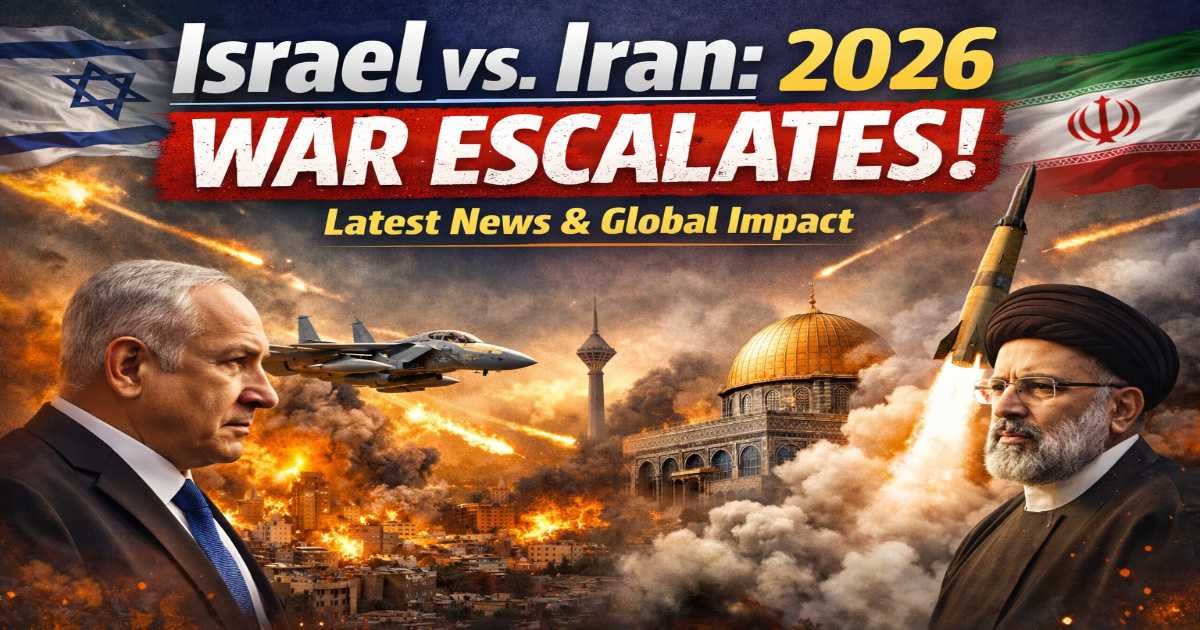
The conflict between Israel and Iran has once again captured global attention as tensions between the two nations continue to escalate in 2026. The ongoing military confrontation has raised serious concerns among world leaders, analysts, and citizens across the globe. From missile attacks and airstrikes to diplomatic warnings, the situation in the Middle East is becoming increasingly complex.
Israel–Iran Conflict
The rivalry between Israel and Iran has been building for decades. Although the two countries have not always fought directly, they have supported opposing sides in regional conflicts and engaged in proxy wars across the Middle East.
Iran has consistently criticized Israel’s policies in the region, while Israel views Iran’s military expansion and nuclear ambitions as a major security threat. Israeli officials, including Prime Minister Benjamin Netanyahu, have repeatedly warned that Iran’s growing influence could destabilize the region.
Over the years, the conflict has played out through cyberattacks, covert operations, and strikes on military targets in countries such as Syria. However, the current escalation in 2026 appears to be far more serious and direct than previous confrontations.
Recent Military Escalation
In recent weeks, tensions have increased after a series of military actions between Israel and Iran. Israel reportedly launched targeted airstrikes against several Iranian military facilities, claiming that the operations were aimed at preventing Iran from strengthening its missile and nuclear capabilities.
Iran responded with missile and drone attacks targeting Israeli defense positions and strategic sites. The situation has created fears of a full-scale war between the two powerful nations.
Military analysts say that both countries possess advanced weapons systems, and any prolonged conflict could significantly affect regional stability.
Impact on the Middle East
The Israel–Iran conflict is not limited to just the two countries. Several Middle Eastern regions are indirectly affected by the rising tensions.
Groups allied with Iran, including forces in Lebanon and Syria, have increased their activities near Israeli borders. At the same time, Israel has strengthened its defense systems and deployed additional military forces.
Neighboring countries are also closely monitoring the situation. Governments across the region are concerned that the conflict could spread and trigger a broader war involving multiple nations.
The Middle East has experienced many conflicts in the past, but experts believe that a direct confrontation between Israel and Iran could be one of the most serious crises in recent years.
Global Economic Impact
The effects of the conflict are already being felt around the world. One of the biggest concerns is the potential disruption of global oil supplies.
A key shipping route in the region is the Strait of Hormuz, through which a significant portion of the world’s oil passes every day. Any military activity in or around this area can affect global energy markets.
As tensions rise, oil prices have shown signs of volatility. Investors and governments are worried that prolonged instability in the Middle East could impact international trade and economic growth.
Air travel routes have also been affected in some areas due to security concerns.
International Reactions
Several global powers have called for restraint and diplomatic dialogue between Israel and Iran. The United Nations and other international organizations have urged both sides to avoid further escalation.
Countries such as the United States and European nations are closely monitoring the situation and encouraging negotiations to reduce tensions.
Diplomatic efforts are ongoing, but reaching a peaceful resolution remains challenging due to deep political and security differences between the two countries.
Possible Future Scenarios
Experts believe that the Israel–Iran conflict could develop in several ways depending on political decisions and military actions in the coming weeks.
One possibility is a limited conflict where both sides continue targeted strikes without expanding into a full-scale war. Another scenario involves broader regional involvement if allied groups or neighboring countries become directly involved.
There is also the possibility that international diplomatic pressure could lead to negotiations and reduce tensions.
However, predicting the exact outcome remains difficult because the situation is evolving rapidly.
Conclusion
The growing tensions between Israel and Iran have created a serious geopolitical situation that the world is watching closely. Military actions, strategic rivalries, and regional alliances have all contributed to the current crisis.
While both nations continue to defend their security interests, many global leaders are urging diplomacy and dialogue to prevent a wider conflict.
The coming weeks will be crucial in determining whether the situation moves toward further escalation or a path toward stability. For now, the Israel–Iran conflict remains one of the most significant international issues of 2026.